
We started with one question.
Why does batter from a packet never taste as good as batter made at home?
We spent a long time in South Indian kitchens trying to figure that out. The answer was not a secret ingredient. It was the grinding.
Most commercial batter is made with metal grinders. They are fast, they scale easily, and they heat the grain as they work. That heat damages the urad dal. The paste you get out is denser, less aerated, and does not ferment as well.
Stone grinding is slower. It runs cooler. The urad comes out lighter and more alive, and it ferments the way batter is supposed to ferment. You will find other brands that say stone-ground on the pack. What they do not always tell you is what that actually means for the idli on your plate.
That is where Swamy starts. The fermentation, the cold chain, the consistency: all of it builds from there.
Our Story
Swamy’s retail division came from two directions at once.
One side knew the batter. Years of running South Indian restaurants in Mumbai had produced a working knowledge of what makes batter behave: which grinding process, which fermentation window, which cold chain. The kind of knowledge that only comes from making it every day and serving it to real customers.
The other side knew how to build and run businesses at scale. Infrastructure, distribution, operations, capital. The experience of having built and grown companies across different categories.
Neither side alone could have done what Swamy does. The product knowledge without the business infrastructure would have stayed in a restaurant kitchen. The business capability without the product expertise would have produced ordinary batter. The combination is why Swamy exists as a dedicated manufacturing operation rather than a restaurant side project.
Today, Swamy produces fresh idli and dosa batter at a dedicated facility in Thane and supplies across organised retail chains.
Why retail, why now
South Indian breakfast has not changed. Idlis, dosas, vadas: these are daily habits for tens of millions of households across India. What has changed is how people shop and what they expect when they buy food.
Modern trade and quick commerce have made refrigerated, fresh products possible at scale for the first time. A consumer in Mumbai can now get fresh batter delivered to their door in 20 minutes. A supermarket can carry a product that was made the previous evening and maintain its quality through a proper cold chain. Five years ago, neither of these things worked reliably. Now
they do.
Swamy was built for this moment. Not a home-kitchen brand trying to scale up. A manufacturing operation built from day one for modern retail: consistent process, dedicated facility, refrigerated supply chain, retail-ready packaging.
The category is growing. The infrastructure now exists to serve it properly. That is the opportunity Swamy was set up to take.
The process, simply put
Step 1: Soak
Step 3: Natural Ferment
Step 2: Stone Grind
Step 4: Pack and Chill
Good food doesn't need to be complicated. It needs to be consistent.
The South Indian breakfast is one of the most nutritious, most beloved food traditions in the country. It just takes time to get right.
Swamy exists to make that easier — without cutting the corners that actually matter. Fresh batter, made properly, available where you shop.
Thane, Maharashtra Dedicated manufacturing facility, Wagle Estate
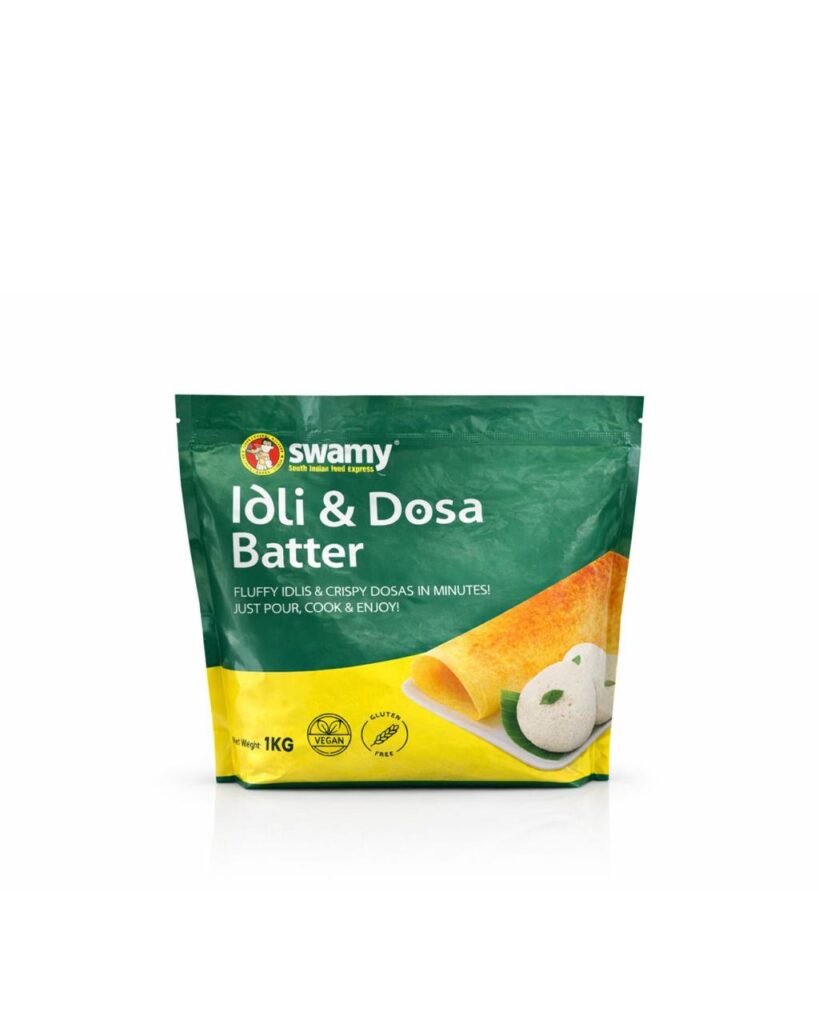
1 kg Single-serve fresh pack. Refrigerated from plant to shelf.
Made and packed the same day Every batch. No exceptions.
Available across organised retail chains in Mumbai & Pune. Coming soon to quick commerce near you!